Executive Summary
DarkMatter Market operates as an advanced hidden service on the Tor network. Established to facilitate secure, peer-to-peer exchanges of digital commodities, the platform distinguishes itself through strict privacy requirements and a minimalist, highly functional interface. Unlike earlier iterations of decentralized networks, DarkMatter mandates the use of specific cryptographic safeguards, ensuring that all communications remain encrypted client-side before reaching the server infrastructure. Observers note that its primary focus revolves around digital privacy, operational security (OpSec), and resilience against network-level disruptions.
Technical Architecture
Cryptographic Framework
The platform enforces mandatory PGP (Pretty Good Privacy) for all sensitive communications. Two-factor authentication (2FA) via PGP decryption is required for account access, mitigating the risks of credential stuffing and unauthorized entry.
Exclusive XMR Integration
DarkMatter operates exclusively via Monero (XMR). By utilizing ring signatures and stealth addresses, the architecture ensures that transaction amounts, origins, and destinations remain mathematically obfuscated from blockchain surveillance.
Walletless Escrow
Traditional centralized wallets are bypassed in favor of a direct-pay order system. Funds are held in isolated, per-order multi-signature escrow contracts, significantly reducing the financial incentive for centralized server compromises.
Load Balancing & Mitigation
Infrastructure relies on a custom implementation of strict Proof-of-Work (PoW) CAPTCHAs at the routing layer. This dynamically scales to protect internal clusters against severe Distributed Denial of Service (DDoS) impacts.
Historical Timeline
Network Genesis
Initial deployment of core routing nodes. Closed beta testing of escrow mechanics and database sharding.
Public Architecture
Transition to public hidden services. Implementation of mandatory Monero (XMR) protocols to ensure ledger privacy.
DDoS Mitigation Update
Introduction of specialized EndGame-style anti-DDoS screens, requiring cryptographic token generation to access the UI.
Decentralized Mirrors
Expansion of access nodes across isolated server clusters to guarantee 99% uptime against persistent network interference.
Interface Documentation
Archival captures of application layer UI.
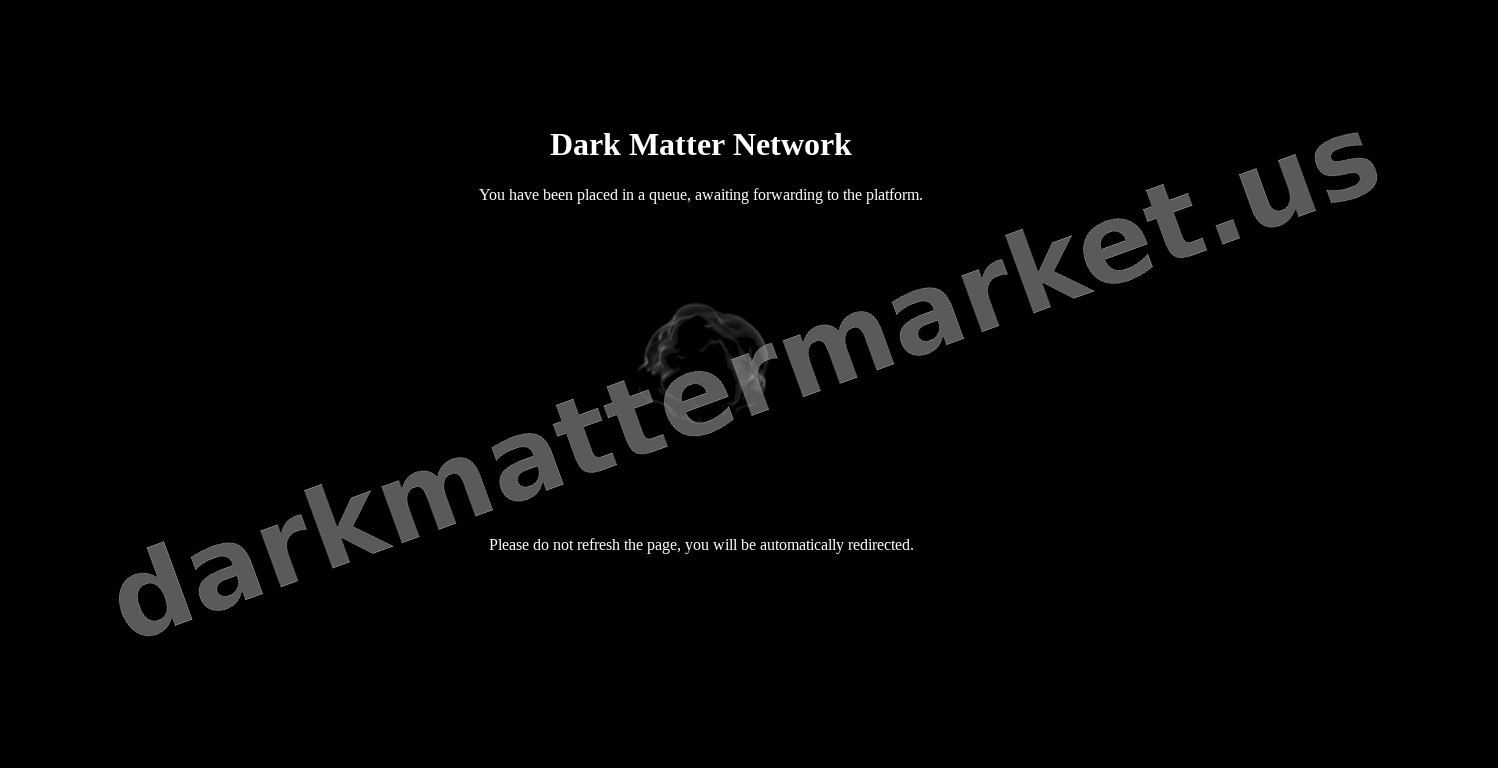
Fig 1. DDoS Protection Screen
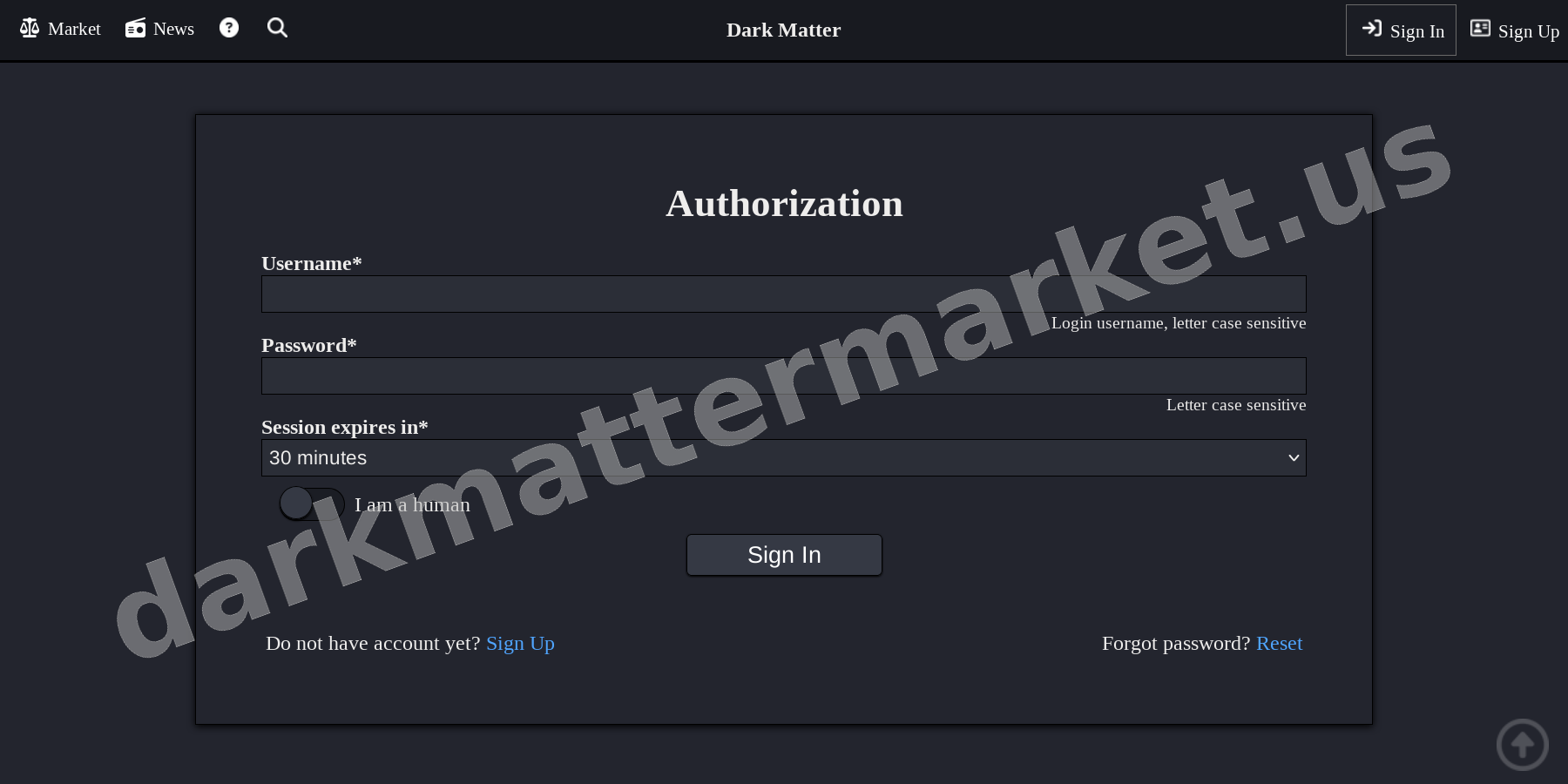
Fig 2. User Login Interface
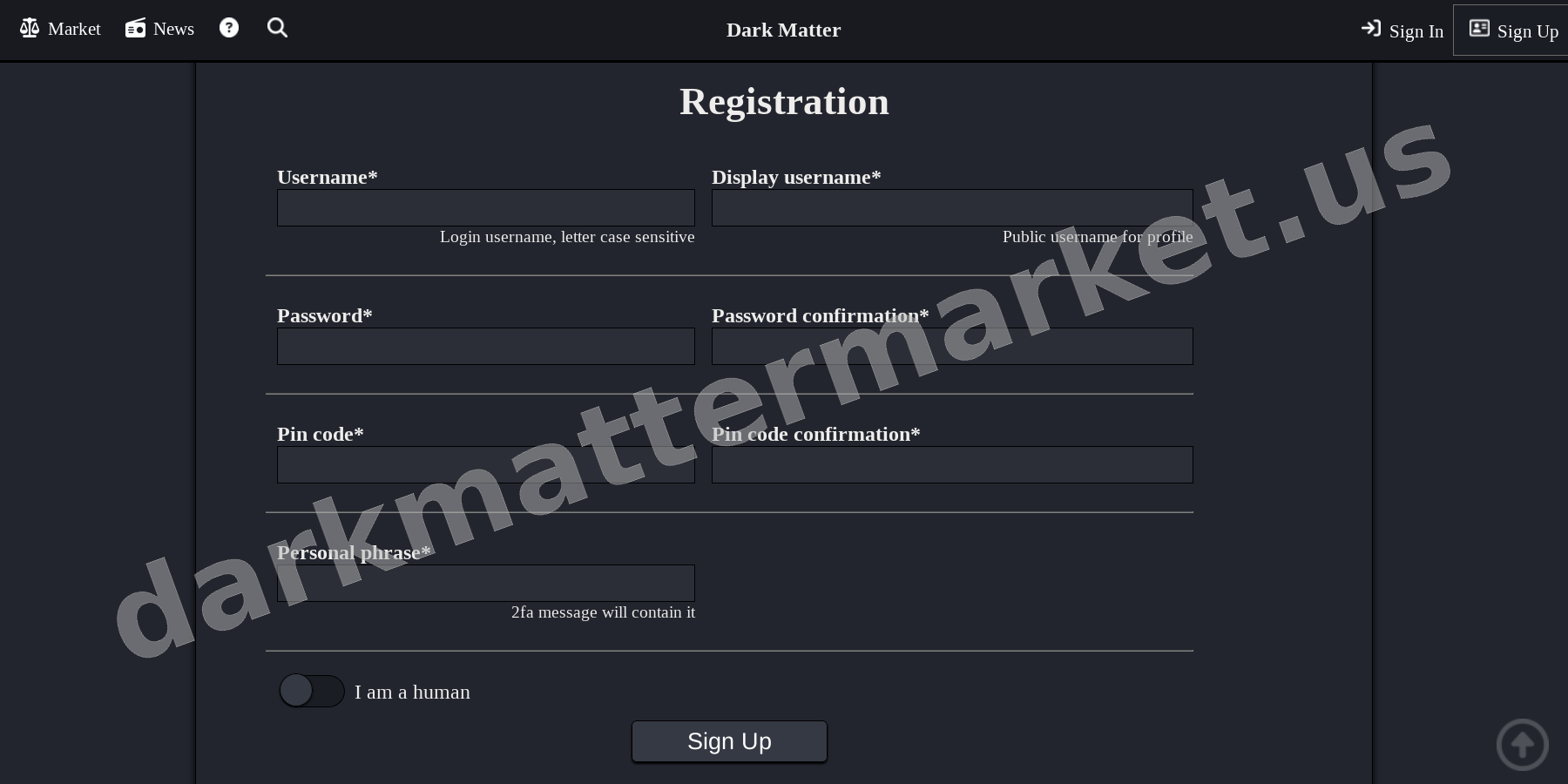
Fig 3. Account Registration Page
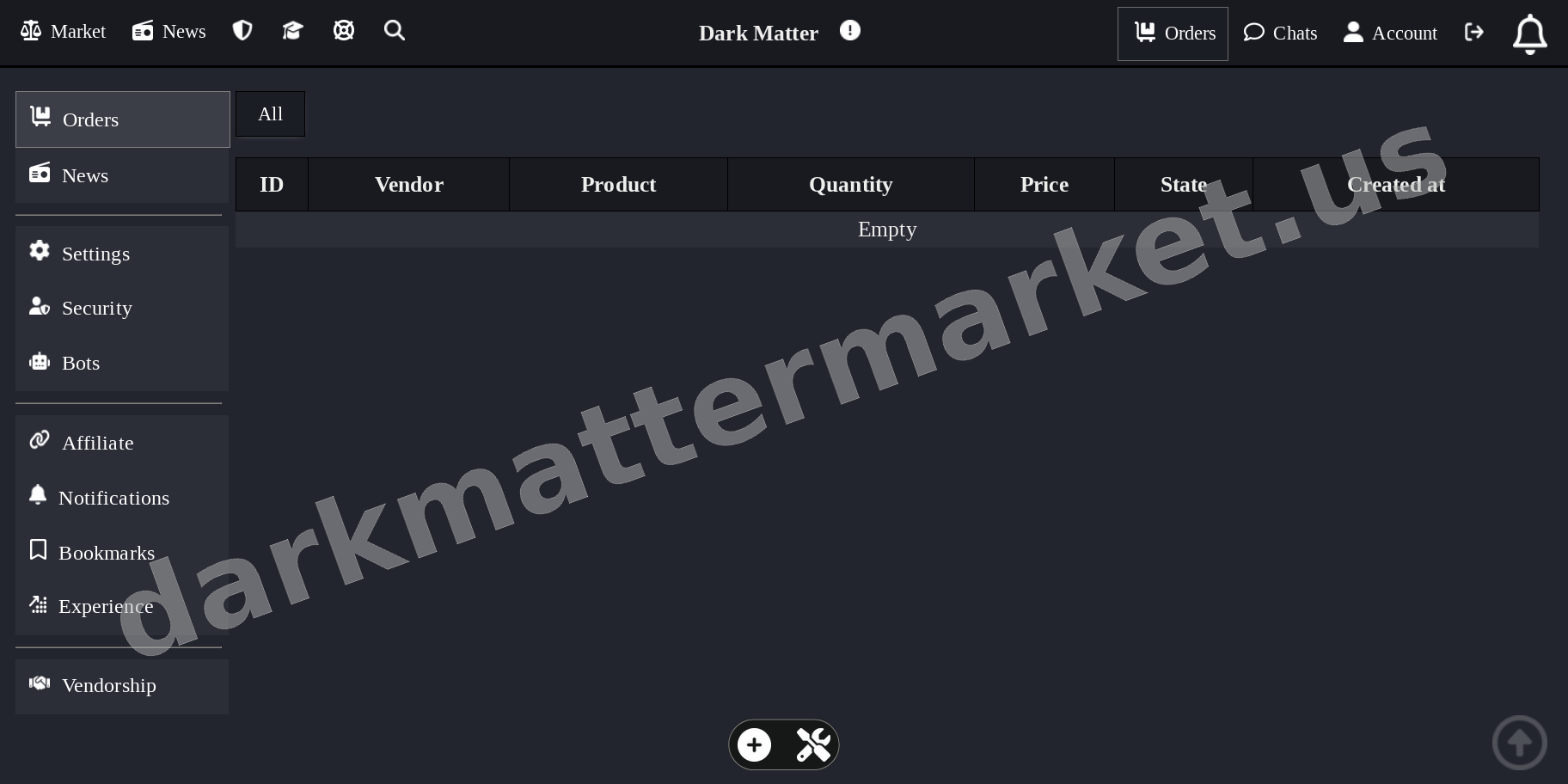
Fig 4. Main Market Dashboard
Network Statistics Data
Verified Merchants
Active Listings
Merchant Bond Req.
Dispute Resolution
The overarching ecosystem relies heavily on reputation mechanics. Merchants are subjected to a rigorous bond requirement to deter fraudulent accounts. Observers indicate that DarkMatter has absorbed a significant portion of distributed network participants following the decommissioning of competing architectures. Independent data collection demonstrates a steady trajectory in network requests, correlating with its stringent adherence to operational security protocols.